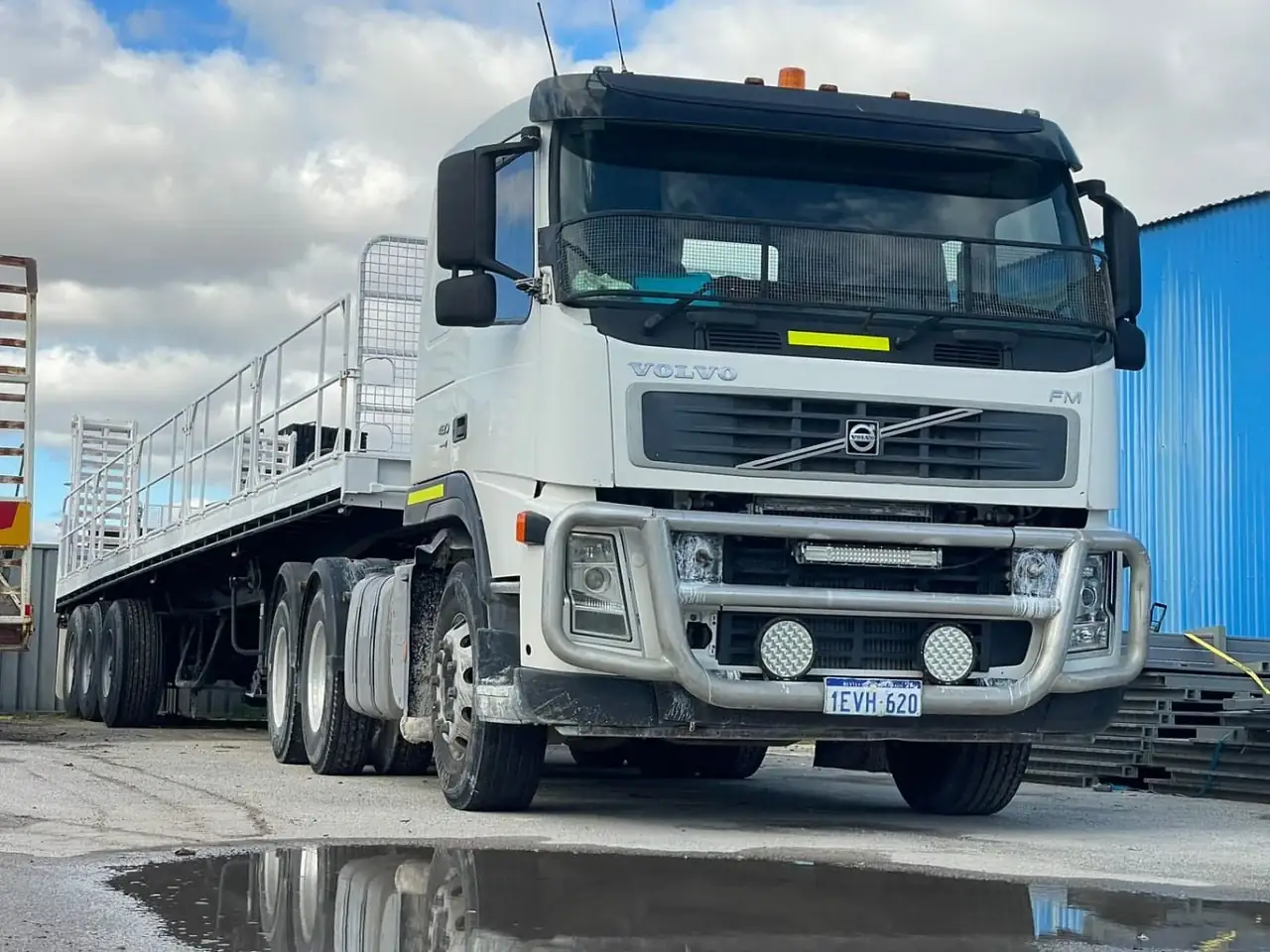
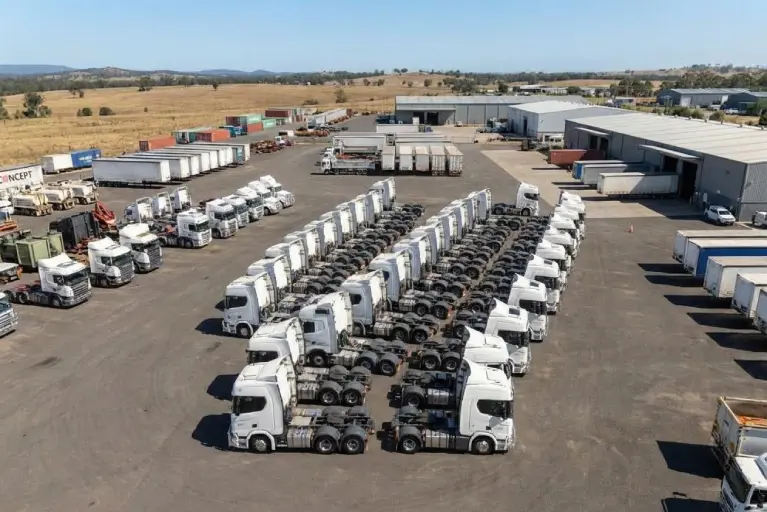
I get asked what truck insurance costs just about every week, and the honest answer is there is no set price.
Truck insurance in Australia is priced on risk, so two operators running the same model of truck can pay very different premiums. The number is built around your whole operation, not just the asset sitting on the schedule.
This guide breaks down what trucks actually cost to insure in 2026, the real ranges I see on accounts, and the things that quietly push your premium up or down.
Key takeaways
- Truck insurance is priced on risk and claims history, not a fixed rate card.
- Indicative 2026 premiums run from about $5,000 a year for an owner driver up to $10,000 to $20,000 for a bigger single rig, but your written quote confirms the real figure.
- Value, freight, drivers, location and loss history are the biggest levers on your premium.
- Documenting your insured values and accessories properly is the cheapest way to keep your premium fair.
Why There Is No Set Price for Truck Insurance
In transport, like any industry, you are either rated conventionally on the asset, or you are claims rated. As soon as you have even one claim, an insurer can start rating you on your claims experience.
That comes down to premium versus losses. We look at what you have paid against the claims you have had, usually over the last three to five years, and work out your loss ratio.
Truck and commercial vehicle insurance also sits higher than a normal car policy for a simple reason. The assets are worth far more, they work for a living, and there is cargo and public liability riding on every trip.

When I pick up a client who has sat with the same insurer for ten years, there is often room to restructure the program or take it to market for a fairer premium. It depends how much work has been done on the account in recent years.
What Affects the Cost of Truck Insurance
When I build a risk profile, the price is never about one thing. It is the asset, the business behind it, and the people driving it, all weighed together.
Roughly in the order they matter, here is what feeds into the number.
- The value and condition of the item, whether it is a prime mover, trailer, tipper or yellow plant.
- What the item actually does each day, the loads it carries and the routes it runs.
- Who is driving it, and the experience of both the operators and the business owner.
- The rest of the fleet it sits alongside, and the company structure that owns it.
- Safety systems, controls and documented processes that are genuinely in place.
- History of losses, claims, incidents and near misses, plus where the business is heading next.
Driver experience and interstate work both move the needle. A newer driver or a tight interstate run carries more exposure than an experienced operator on predictable regional routes, and your claims history sits over the top of all of it.
Average Truck Insurance Costs in Australia for 2026
I will not give a single number, because it does not exist, but real accounts do fall into patterns. The ranges below are indicative for 2026, based on actual programs I have placed for asset and liability cover.
Treat them as a starting point, not a quote. Your written quote will show the exact figure once we have rated your specific operation.
There is a floor to all of this. An insurer is never going to cover a $100,000 vehicle for $1,000, and even a work ute sits closer to $2,000 these days.

| Operation | Typical Setup | Approx Asset Value | Indicative Premium / Year |
|---|---|---|---|
| Owner driver (one-man band) | Older prime mover around $90,000 towing a couple of trailers at $40,000 to $50,000 each | A couple hundred thousand | $5,000 to $10,000 |
| Upgraded single rig | Newer prime mover around $300,000 with a flat top and drop deck | Half a million plus | $10,000 to $20,000 |
| Mid-range tow truck | A half-decent tow truck around $100,000 | Around $100,000 | $5,000 to $10,000 |
| Small to large fleet | Multiple trucks, trailers and plant rated as one program | Hundreds of thousands to many millions | Commonly 1% to 4% of value |
Spread across the year, an owner driver in that range works out very roughly $400 to $850 a month, though most operators pay annually or by instalment. A fleet is impossible to pin to one figure because it depends entirely on the mix, so a tailored quote is the only honest answer there.
Why a Dearer Truck Is Not Always Dearer to Insure
Premiums climb with value, but not in a straight line. A $100,000 prime mover might rate around 3%, yet a $300,000 truck will not simply be three times the premium.
It often comes in closer to 1.5% or 2%, because a dearer truck is usually newer, more reliable and needs less maintenance. The curve gets more efficient as values rise, depending on the insurer and your loss history.
It works at fleet level too. I have a client running 50 to 60 light vehicles where the unit cost is down near $400 against a more typical $1,000, simply because the whole pool is rated well at under 1%.
On the biggest, well-run programs the rate can drop further again, with miscellaneous items sitting as low as 0.6% to 0.7%. Our clients range from a couple hundred thousand dollars of equipment up to many millions, and the rate always comes back to how the whole premium pool performs each year.
How Your Freight and Trailers Change the Price
What you carry decides the trailer, and the trailer decides a big chunk of the risk. Pallets on a flat top behind a $90,000 prime mover is a very different exposure to moving heavy plant.
To shift a loader or specialised plant you are on a low loader worth around $150,000, with loading and unloading risk on top. Refrigerated work brings its own breakdown and destination risk.
Bigger or more specialised loads also lift your marine transit and your liability, because the consequences of something going wrong on the road are far greater.
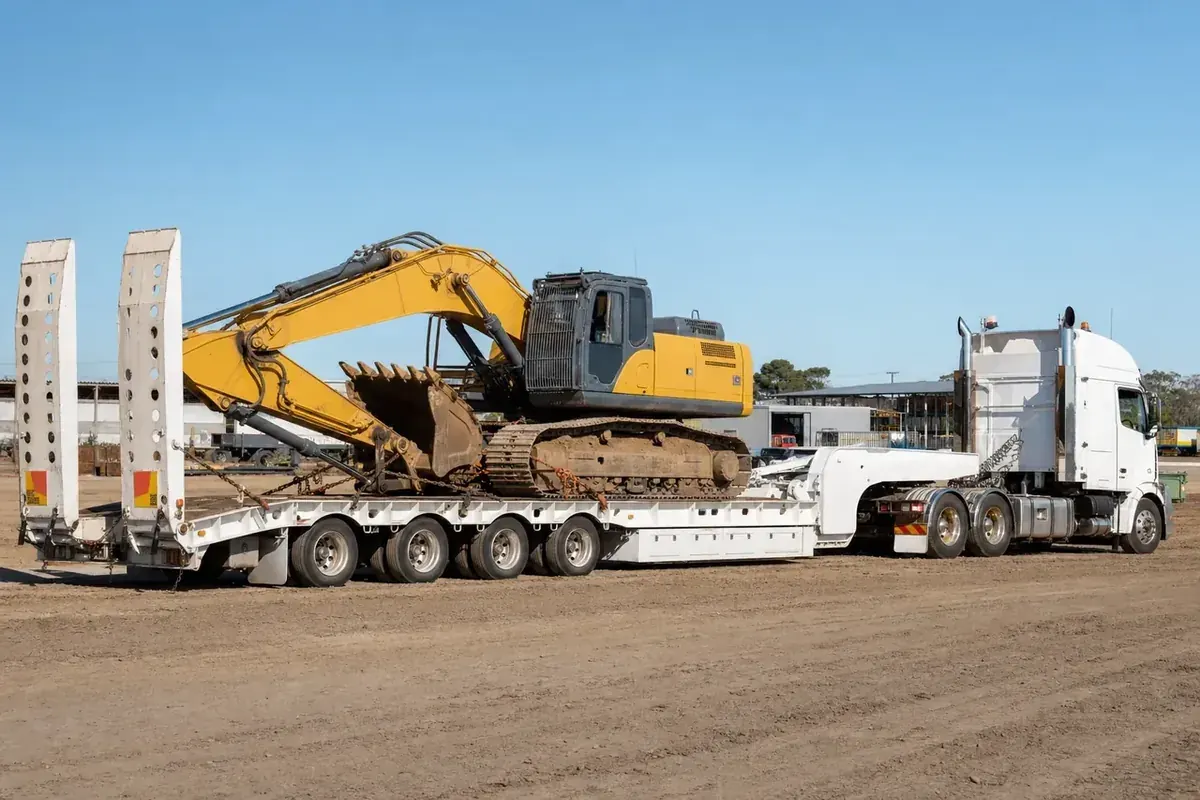
Specialised tankers and custom-built trailers are uncommon, so if one is written off you often need an agreed value from the manufacturer to actually replace it. Specialised gear also takes longer to repair and costs more in parts, which feeds straight back into the premium.
What Types of Truck Insurance Can You Take Out?
When people say truck insurance they usually mean several covers working together, and for most transport clients I arrange three core ones.
Comprehensive cover protects the value of your own asset as well as damage to others, and it is what most operators run. Third party only covers the other party, not your own truck, and these days it is uncommon outside large gear that sits parked up for long stretches.
On top of the core three, cyber cover is worth a look if you have staff or contracts, and management liability is a cost-effective bit of protection for the governance side of the business.
- Public and products liability, for injury or damage you cause to others.
- Motor or fleet insurance, which covers the value of your own vehicles and assets.
- Marine transit, which covers other people's cargo, set as a single limit per conveyance (per trip), whether you pull one trailer or three.
Downtime cover sounds appealing, but insurers rarely offer it now and it is usually not worth it. If you take a truck off comprehensive while it is parked, then a client rings needing it moved, it goes down the road uninsured. For the sake of a thousand or two in savings, keep it on comprehensive unless it is genuinely locked up or having the engine rebuilt.
Document Your Assets and Accessories
This is the cheapest premium lever most operators miss. Coming up to renewal, go through your asset register: when each item came on, the year, make, model, type, and every accessory added. Some insurers want those accessories noted as one lump-sum figure, others want them itemised, so ask how yours prefers it.
Accessories matter more than people think. If a truck is insured for $200,000 but carries $100,000 of extras that were never noted, that gap shows up at claim time when it is too late to fix.
Take a photo or video walk-around of each truck and keep a running list. You are around the gear every day, so it costs you nothing and it protects the claim.
Attention to detail also makes you a better risk. When an insurer can see a client is on top of their values and paperwork, you present better, and a better risk is what earns a sharper rate at renewal.
How to Get an Accurate Truck Insurance Quote
You can rate yourself on the direct market, and online truck insurance calculators do exist, but they cannot profile your risk the way a broker and an insurer can in a real conversation. A calculator works off blunt assumptions, so the estimate can be a long way off.
Because we write a lot of transport at All Trucks Insurance, the insurers know our process and our clients are well presented, which helps the negotiation. That is the part a calculator cannot do.
On turnaround, the safe expectation is five to seven days, but it really comes down to information. If a client is forthcoming with values, assets and claims history, we can often turn a quote around in about 24 hours, and once we have terms we can bind within the hour and issue a certificate.
- Whether you are a new or established business, and your current broker or insurer.
- Your assets and their values, and the activities and transport type you run.
- Your experience in the industry, your target clients, and the next year or two ahead.
- Your ABN, business structure and directors, plus any losses or claims in the last five years.
With a dedicated truck insurance team on it, we aim to turn quotes around in about 48 hours when the process runs well. The more complete your information, the faster and sharper the quote comes back.
Frequently Asked Questions
Generally yes, when the cover is held through an ABN as a business operating expense. We are transport insurance specialists, not tax advisers, so confirm the detail for your situation with your accountant.
Yes. Driver experience and licence history feed directly into the rate, so a less experienced driver can lift the premium. All of your drivers can still be covered on the one truck, so it is worth giving your broker an accurate picture of who is behind the wheel.
Yes. Around half of the truck policies we place note a financier on the certificate of currency. We can issue that certificate quickly once the policy is bound, which is usually what the financier needs before releasing the asset.
Trailers are not automatically covered under your prime mover, but we add them to the same policy when they are listed. That covers everything from a small box trailer up to flat tops, taut liners and ultra-heavy low loaders.
Your vehicle cover protects the truck, while the cargo is covered by marine transit. Marine transit is set as a single limit per conveyance, meaning per trip, whether you are pulling one trailer or three.
After the first response, the truck is assessed. If it is beyond economical repair it is deemed a total loss, we confirm the market or agreed value, pay out the insured and remove the item from the policy.

Written by
Paul Cohalan
Founding Principal Broker, All Trucks Insurance
Paul is the founding principal broker at All Trucks Insurance, with more than 10 years broking transport, fleet and plant cover and an operational career in mining and heavy haulage before that.
Read Paul's full profile