AI overview
An excess is the part of a claim you pay yourself. On a truck or fleet policy you can set it to suit your cash flow, so you pay the small claims yourself, and that usually helps keep the premium down.
Key highlights
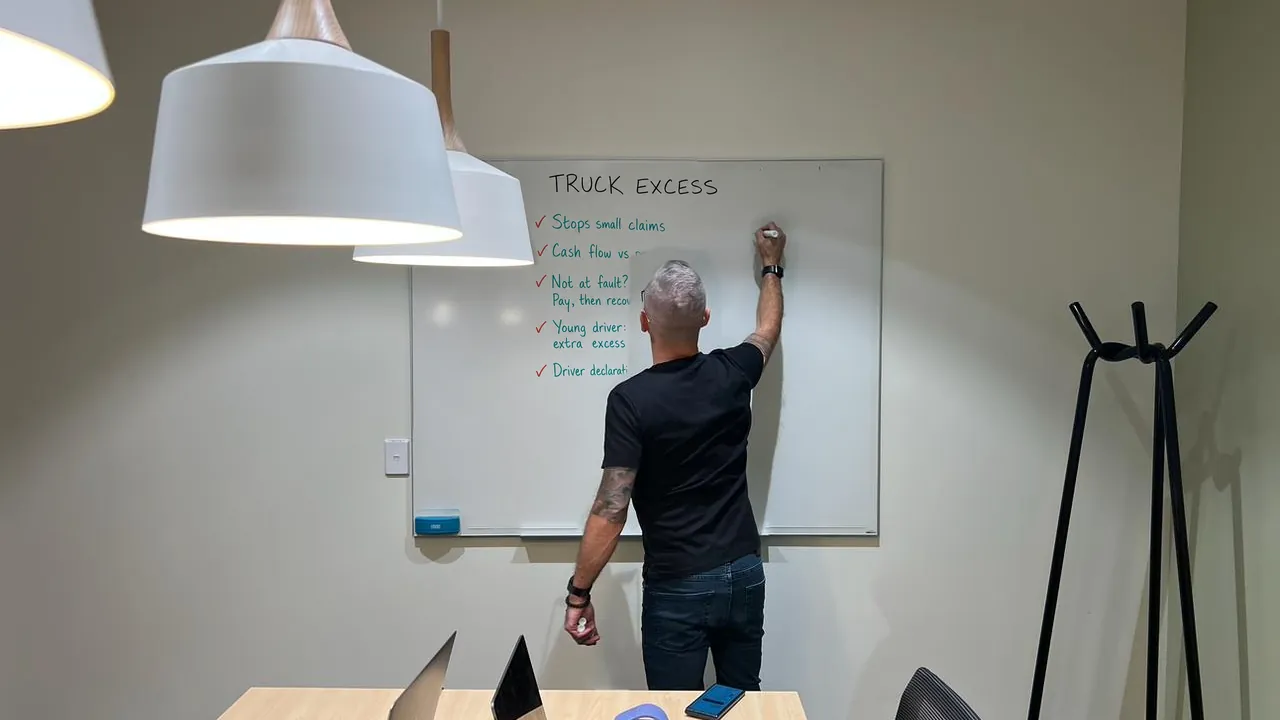
- An excess, or deductible, is the amount you pay when you make a claim. The number one thing it does is stop a high frequency of small claims.
- A fleet that has had several claims of $5,000 to $20,000 can take a higher excess, such as $10,000. It pays the smaller claims itself and claims less often, and that can bring the premium down.
- The right excess comes down to your cash flow and your risk profile, meaning how your trucks, drivers and claims history look to an insurer. It is set business by business.
- Not at fault? If it is black and white from the start, you will not pay the excess. If fault is not clear cut, you pay it up front and get it back later.
- Young or inexperienced drivers can attract an extra excess on top of the standard one. On utes and other light vehicles it is around $750 to $1,250 per vehicle, per incident. On a truck it might be another $1,200, $2,000 or $2,500 for a driver under 25, and it varies.
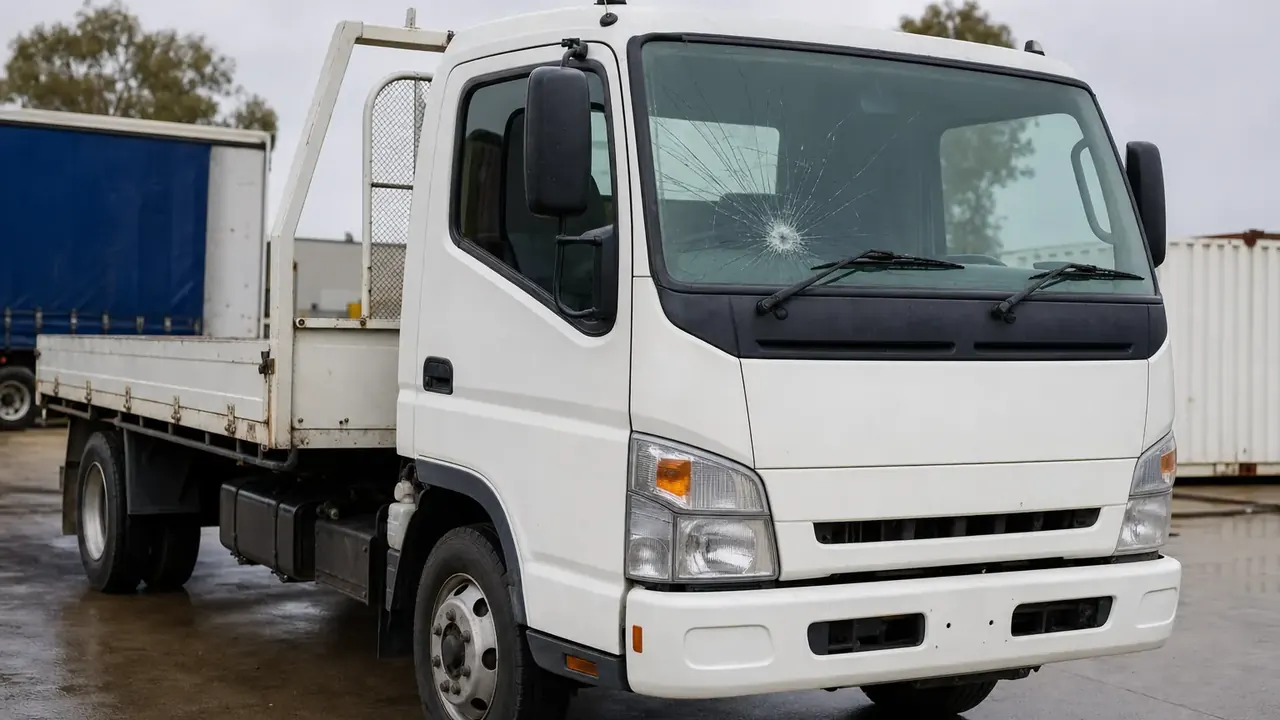
- A windscreen claim is not free. If your business operates multiple vehicles, it is often better to pay the windscreen company yourself and keep it out of the claims process.
- Check the licence, call the references, get a driver declaration and do a trial run before a new driver goes out on their own.
Summarise with AI
Open this article in your AI assistant for a quick summary.
An insurance excess, also called a deductible, is the amount you pay towards a claim before the insurer pays the rest.
We all learn it with car insurance. Typically, you pay a thousand dollars a year for the policy, you have an incident, and you pay $500 or $750 of the claim yourself.
On a truck, fleet or plant policy the excess does the same job, but there is a lot more room to set it to suit your business, and the drivers you put behind the wheel can change it.
What Is an Insurance Excess?
Your excess, or another word for it, a deductible, is the amount you pay when you make a claim. The insurer pays the rest of the claim, up to the limits of the policy.
People often ask what the point is. Why hand over $500 when the insurer is paying out $20,000 or $30,000 for the vehicle? The number one thing an excess does is stop a high frequency of small claims.
Not every incident is a total loss, where the vehicle is written off. It might be a $5,000 or $10,000 repair, and that is where the excess does its work.
Excess and deductible mean the same thing. Do not confuse it with an excess layer, which is a second liability policy that sits on top of the first one once its limit is used up. We explain that in our guide to certificates of currency.
How Does Insurance Excess Work on a Truck or Fleet Policy?
On a personal car policy you cannot usually change the excess by much. On a truck fleet you can, and that is where it becomes a tool.
Say your business operates ten to twenty trucks. Last year you had three or four claims, and they were $20,000 each. That is $60,000 to $80,000 worth of losses, so your premium comes back higher at renewal.
What you can do then is put a $10,000 deductible on the policy to cut down those $5,000, $10,000 and $20,000 claims. You pay the small ones yourself, and on the bigger ones you pay the first $10,000.
| Policy | Example excess |
|---|---|
| Personal car | $500 or $750 per claim |
| Truck fleet with several small claims | A $10,000 deductible |
| Drilling company | A $50,000 deductible |
Why Small Claims Cost You More Than the Repair
Obviously no one wants to put through a claim. When you do, your claims history changes, and putting through a minor claim might not be a good idea in the long term.
It usually goes one of two ways: a one-off big claim, or a lot of smaller ones. A courier business probably has a lot of small claims. The insurer does not want that many claims, and neither should you.
If you want to manage the business smarter, take the small repair to a local smash repairer and pay for it yourself.
The biggest thing is turnaround time, not just the cost of the repair. The sooner your wheels are turning again, the sooner the truck is earning revenue. Your claims history is what an insurer reads at every renewal.
The Windscreen Is Not Free
Everyone talks about a free windscreen. It is not a free windscreen. It is a windscreen with a small excess.
Even with a small excess, the insurer still has admin costs, and the full cost of the windscreen is paid out as a claim against your policy. On a truck, a windscreen can now cost $3,000, $4,000 or $5,000, and that cost goes on your claims history.
So I tell my clients this. If your business operates multiple vehicles and goes through a few windscreens, you are often better off paying the windscreen company yourself. Just make sure you have the cash flow to replace them.
That way you are not putting the process through your broker or the insurer, and there are always admin costs at the insurer that you do not see.
Do You Pay the Excess If the Accident Was Not Your Fault?
It depends on how clear the fault is. If it is black and white that the accident was not your fault from the beginning, you will not have to pay the excess.
If it is ambiguous, meaning not clear cut, you will pay the excess up front and get it back later. The insurer recovers the money from the third party, the other driver or their insurer, and your excess comes back to you once that recovery is made.
- Clearly not your fault from the start: no excess to pay.
- Fault not clear cut: pay the excess up front.
- Once the insurer recovers from the third party: your excess is refunded.
Extra Excess for Young and Inexperienced Drivers
If you have a young driver, or a driver with past incidents or licence issues, the insurer might put an extra excess on top of your standard excess. On utes and other light vehicles that is around $750 to $1,250, per vehicle, per incident, and it can vary.
Say you would normally pay a $2,500 or $5,000 excess on an incident involving a $300,000 truck. The insurer might add another $1,200, $2,000 or $2,500 because the driver is under 25. It depends on the licence level as well, because you could be talking heavy rigid (HR) or multi combination (MC), not just a car licence.
The extra excess is put on the policy at the time it is set up, so the answers you give your broker decide where it applies.
Licence classes, and the conditions to move up to a heavier one, are set by each state and territory. In WA, the Department of Transport covers the heavy rigid licence and the multi combination licence. Elsewhere, see the NSW Government licence classes, the Victorian heavy vehicle licence categories, the Queensland Government licence types and the SA Government licence classes.
We arrange cover for fleets across Australia, with local pages for truck insurance in Perth, Sydney, Melbourne, Brisbane and Adelaide.
- How many drivers do you have, and how experienced are they?
- Do you have young drivers, and how long have they held their licences?
- Has any driver ever been disqualified?
Your broker should ask these questions ten to twelve weeks out from your renewal, while getting to know your risk profile. Inexperienced does not always mean young. When someone can move up to a heavier licence class depends on each state and territory's licence conditions and training.
Driver Declarations and Your Excess
This ties back to the excess: I push driver declarations on a lot of my clients now. A driver declaration is a signed statement from the driver about their licence and driving history.
It is not about being big brother over your drivers. It is about accountability, so drivers are honest about their licence history. It does not take the responsibility away from you as the business owner, but it shows you have taken responsibility and done the right thing.
Say you checked a driver's licence when you hired them, and later they had an incident with a licence that was no longer valid. If you did not know, you are usually still covered, depending on the policy.
Same as drink driving: if you let them drink at work and leave, you are accountable. A declaration does not mean you are scot free. It means you can show you did everything and took a duty of care.
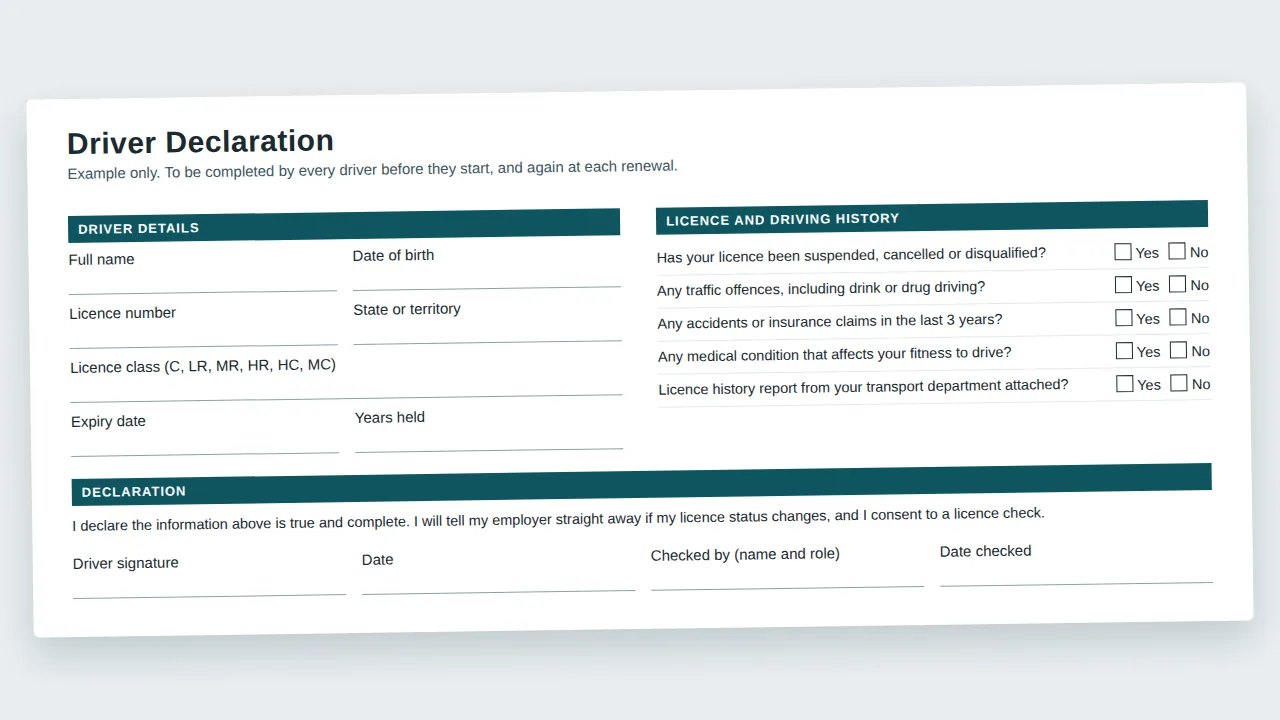
Heavy vehicle safety duties are also set in law. The National Heavy Vehicle Regulator explains who shares them under the chain of responsibility and the Heavy Vehicle National Law.
How to Onboard a New Truck Driver
You avoid getting stung by checking a new driver properly before they start. If I hire someone in a cafe to make coffee, I test them, trial them, ask about their history, call their references and get them to do the practical work. Hiring a truck driver is the same, with a lot more at stake.
A really good transport company might use a third party for training, or put a new driver through a training program over one, five or seven days. A small business that cannot afford a big program might have the owner jump in the truck with the driver on a trial run.
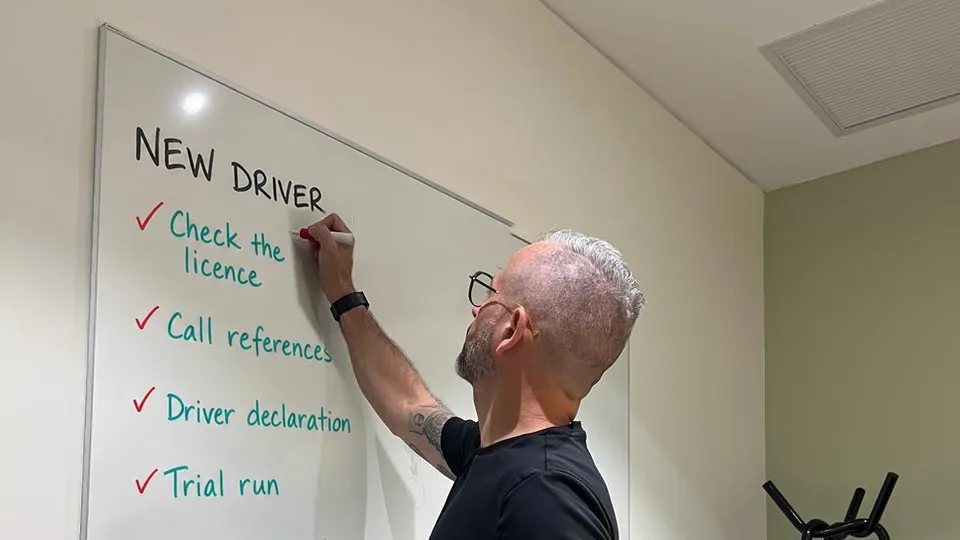
- Where have you worked? Call the references.
- Check the licence: how long have they held it, who checked it, and is it valid?
- Get a signed driver declaration.
- Go for a drive in a smaller vehicle first.
- Do a trial run in the truck, with training from a third party or the owner in the cab.
- Ask what they have driven: an auto or a manual gearbox, a single trailer, a B-double or a triple, and which trailers, such as a drop deck or flat top.
Why the Job Matters as Much as the Licence
You might be 25 and a very good driver. But a driver could have towed a flat top for five years and never loaded a drop deck, chained down a load or secured freight on a trailer they have not used before.
Put them behind a tipper and you have weight distribution and centre of gravity to think about. Tippers roll over a lot, because people tip them on a lean and do not understand where the load is, depending on what is in the back.
It is not just driving the truck. If you pull up to unload and tip, you can pull the whole truck and trailer over, and that incident could be on site, not even on a road.
This is a high-risk industry, and that is why your broker needs to know it and understand your business, not just sell you a policy.
Tipping, loading and on-site work are part of the risk on a tipper truck or a prime mover. Tell your broker what each driver will actually do, not just what they drive.
Frequently Asked Questions
An insurance excess, also called a deductible, is the amount you pay towards a claim before the insurer pays the rest. On a truck or fleet policy, its main job is to stop a high frequency of small claims.
When you claim, you pay the excess and the insurer pays the rest, up to the policy limits. On a truck fleet you can set a higher excess, such as $10,000, so you pay the small claims yourself and the premium is usually easier to manage.
If it is clear from the start that it was not your fault, you will not have to pay the excess. If fault is not clear cut, you pay it up front and get it back once the insurer recovers the money from the third party.
It depends on your risk profile and your cash flow. A higher excess only makes sense if you can pay it out of cash flow when something happens. Talk it through with a broker who knows transport before you change it.
On utes and other light vehicles it is around $750 to $1,250 per vehicle, per incident, on top of the standard excess. On a truck it might be another $1,200, $2,000 or $2,500 for a driver under 25. It varies with the driver's age and licence class.
Not always. Inexperienced does not always mean young. When someone can move up to a heavier licence class depends on each state and territory's licence conditions and training.
Often not, if your business operates multiple vehicles. A windscreen claim is not free: you pay an excess, the insurer has admin costs, and the full cost of the windscreen goes on your claims history. Paying the windscreen company yourself can be cheaper in the long run.
A signed statement from a driver about their licence and driving history. It keeps drivers accountable and shows you, as the business owner, did your checks and took responsibility.
No. An excess is the part of a claim you pay. An excess layer is a second liability policy that sits on top of the first and pays only once the first policy's limit is used up.

Written by
Paul Cohalan
Founding Principal Broker, All Trucks Insurance
Paul is the founding principal broker at All Trucks Insurance, with more than 10 years broking transport, fleet and plant cover and an operational career in mining and heavy haulage before that.
Read Paul's full profile